Clone and remix.
Four projects that look like real jobs: a concert, a gallery installation, a painting and a robot cell. Open one, press play, and make it yours.
Afterglow
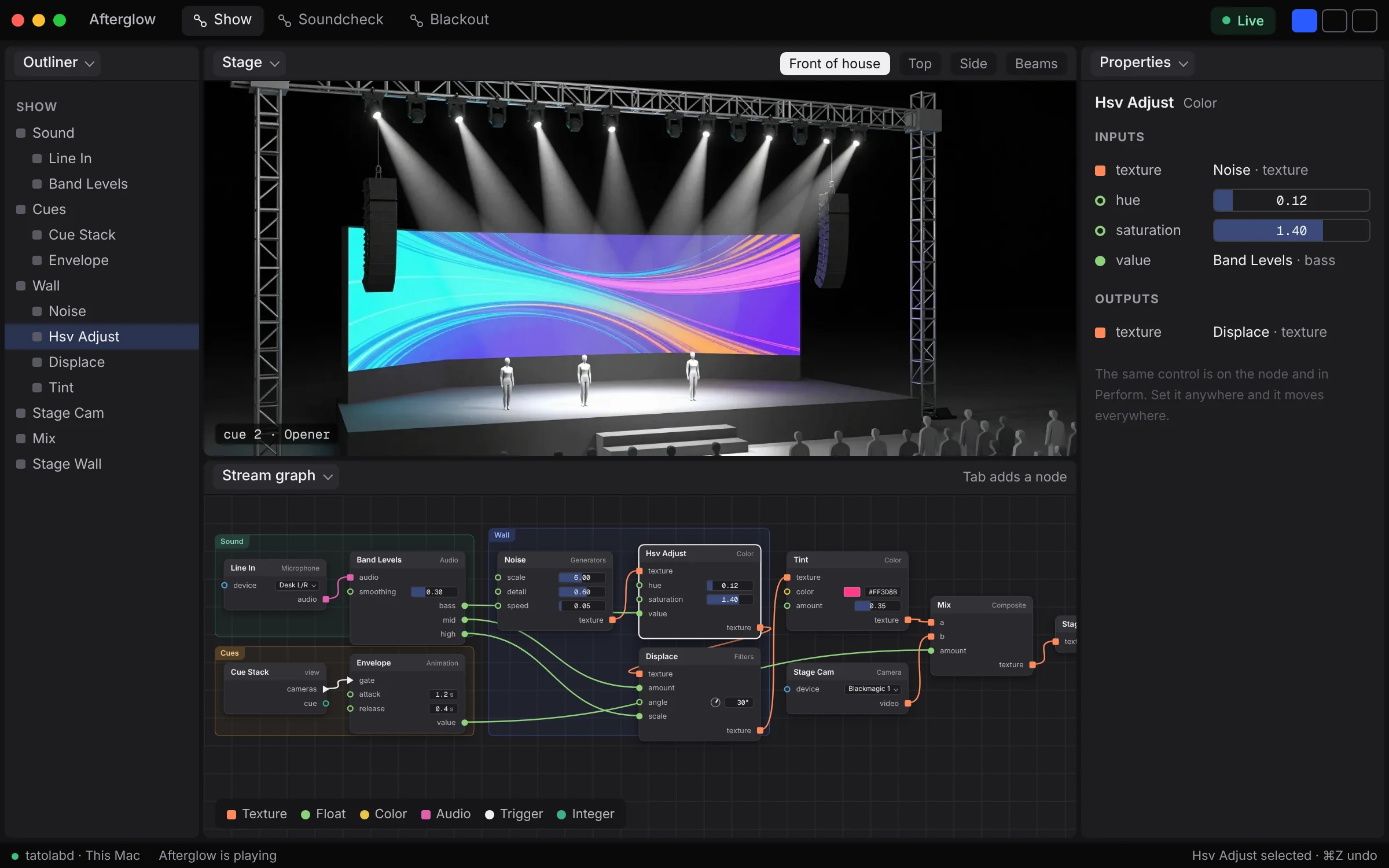
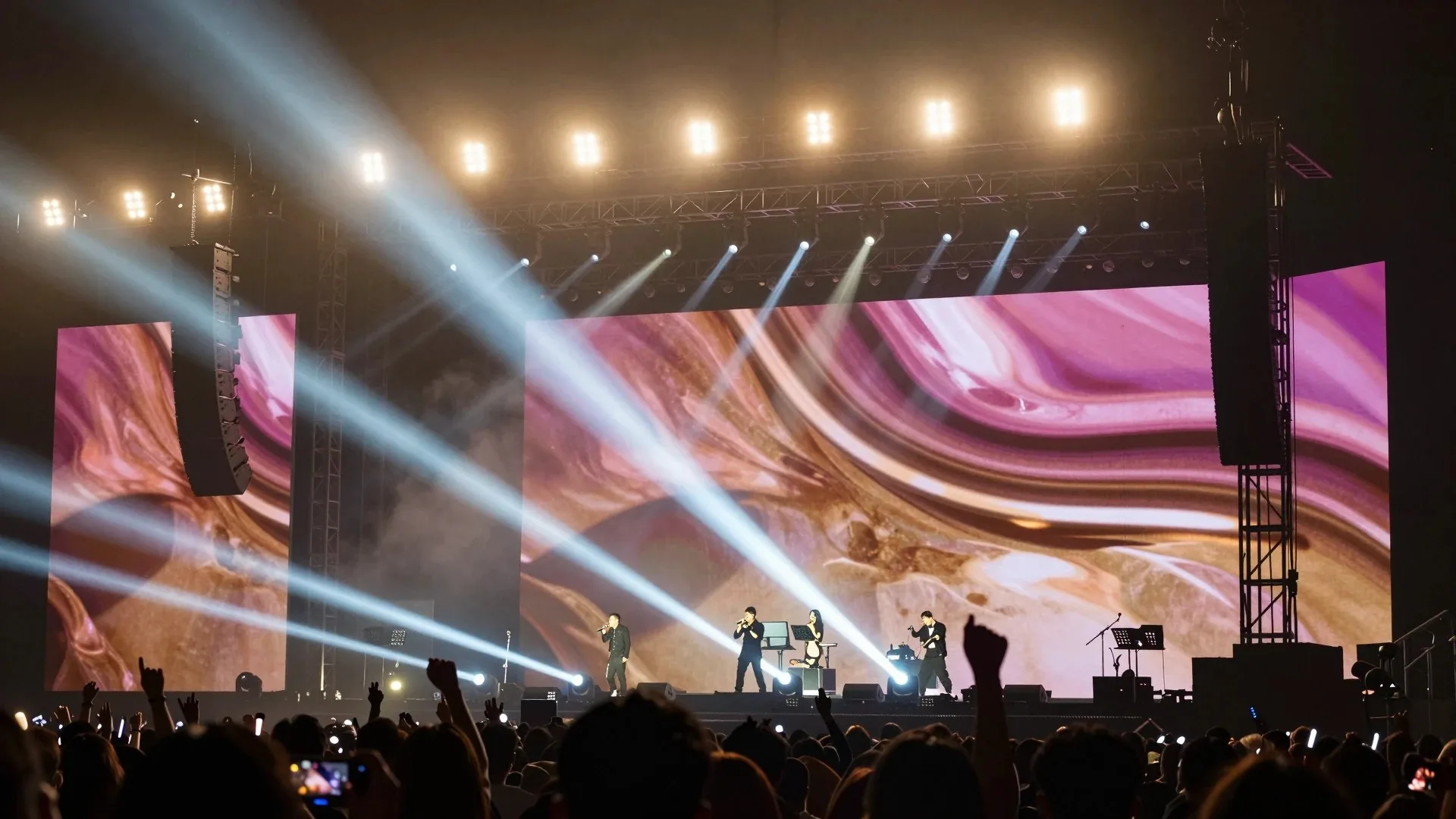
Live concert
The screens behind a band on an arena tour. The visuals ride the sound coming off the mixing desk, the stage cameras cut in for the big songs, and one operator runs the whole night from a cue list.
- How it's built
- A line in from the desk is split into bass, mid and high, and those three numbers push the picture around. A cue stack fades the stage camera in and out.
- Make it yours
- Give every song its own look, add a cue, bring in a second camera. Hue and saturation are already in Perform for the operator.
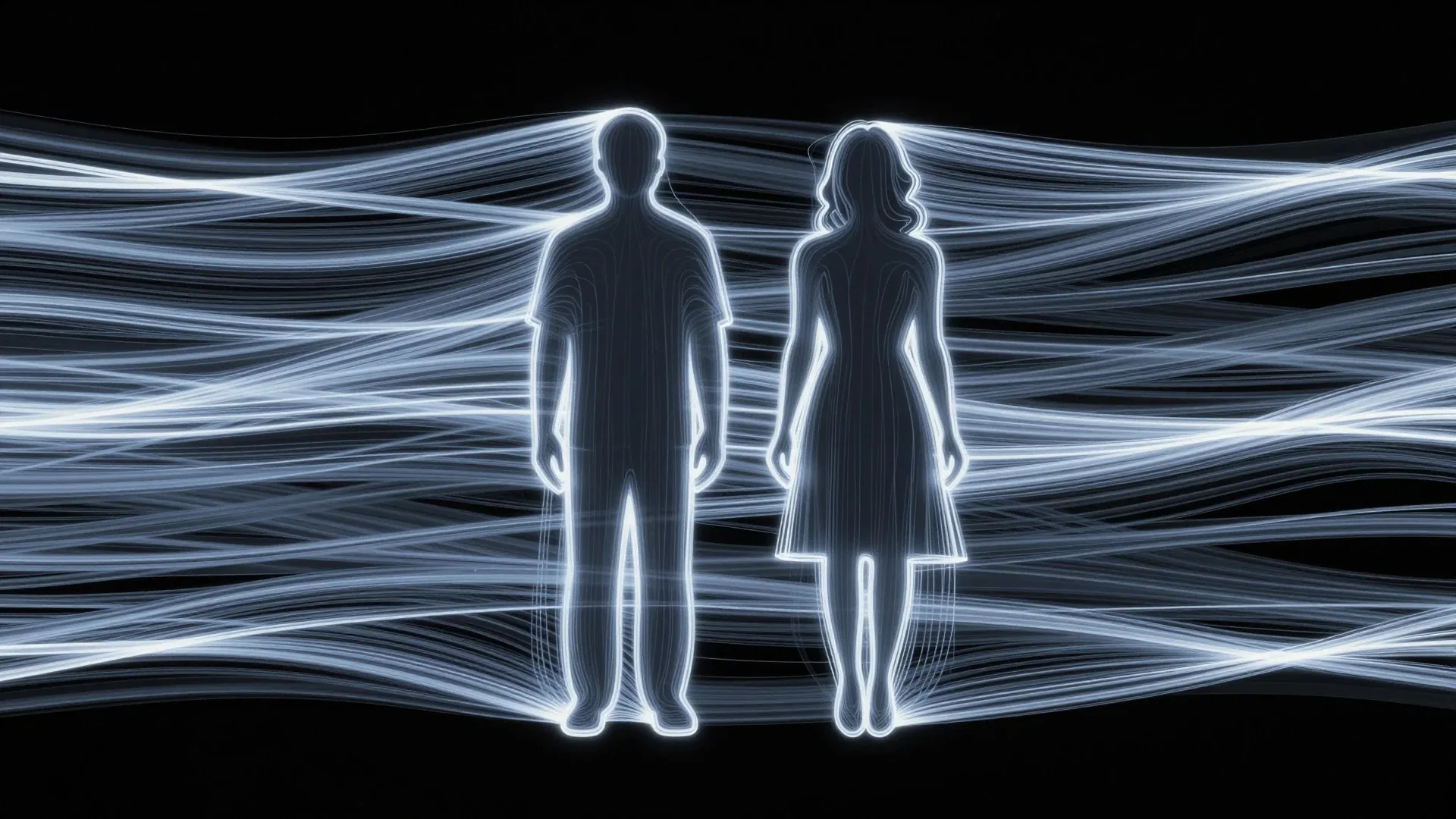
Tide Room
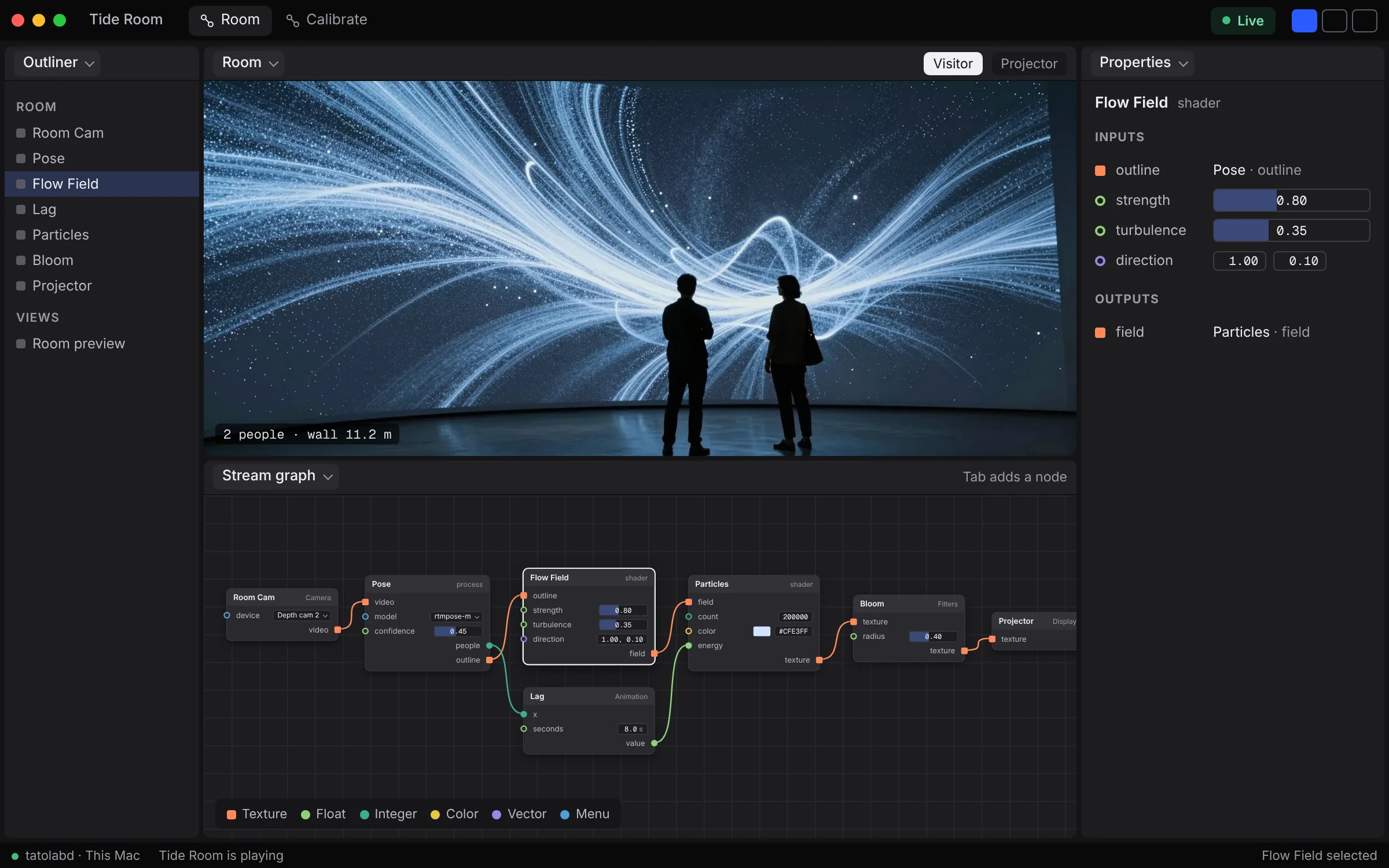
Interactive installation
A wall of light in a gallery. Stand still and it flows past you like a tide. Raise an arm and it follows. When the room empties, it settles back down.
- How it's built
- A camera feeds a pose model, which hands the piece an outline of everyone in the room. A flow field bends around the outlines and particles ride it.
- Make it yours
- Swap in a depth camera, or the model you already trust. Anything you can run in Python will do, and the camera frames reach it without leaving the graphics card.
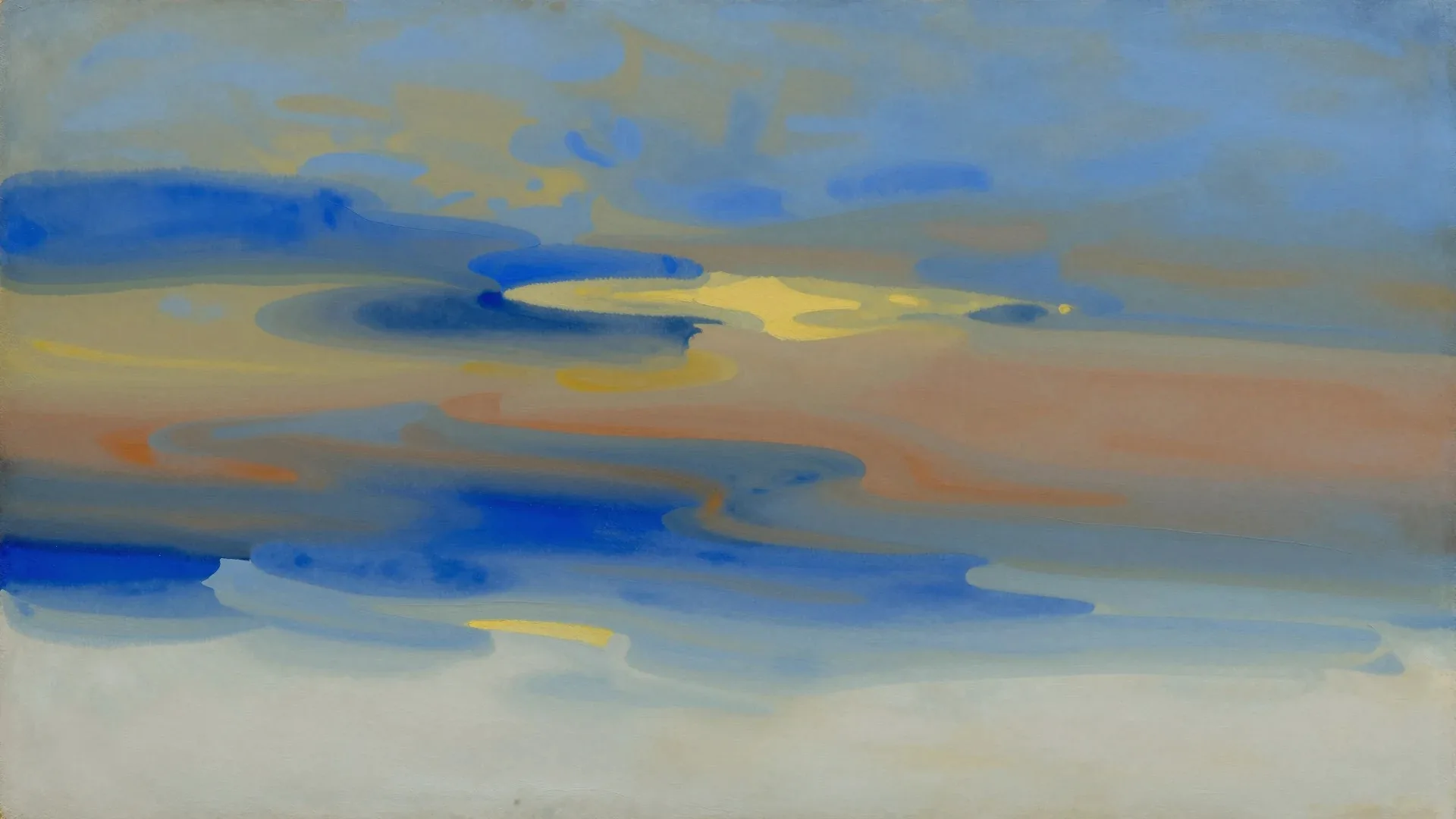
Slow Weather
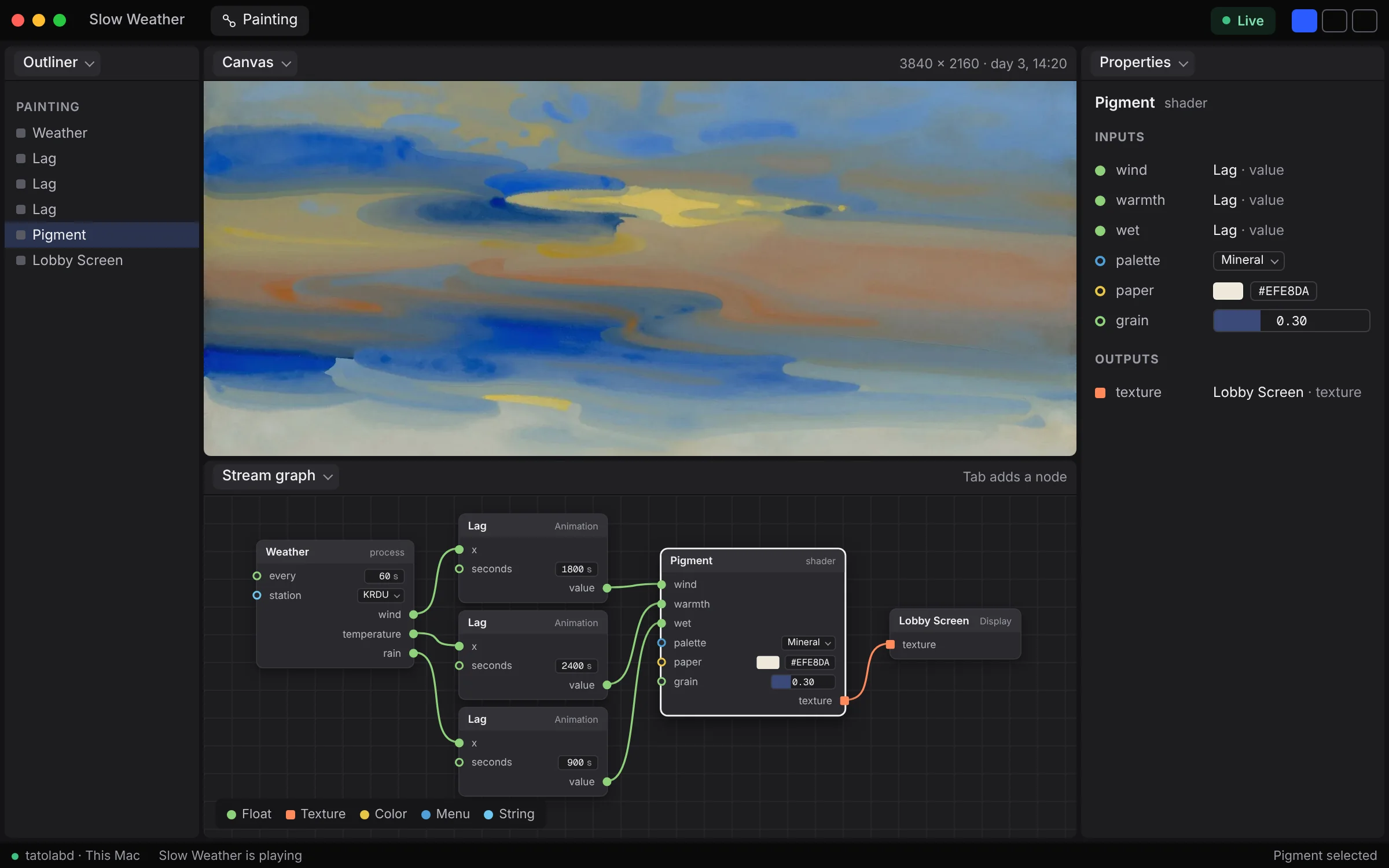
Generative art
A painting for a lobby that is never the same twice. It reads the wind, the temperature and the rain outside the building, and drifts from one state to the next over hours.
- How it's built
- A small Python node reads the weather once a minute. Three slow followers smooth the numbers out, and one shader turns them into pigment.
- Make it yours
- Feed it anything that changes: a stock ticker, a heartbeat, footfall through the front door. Or just change the palette.
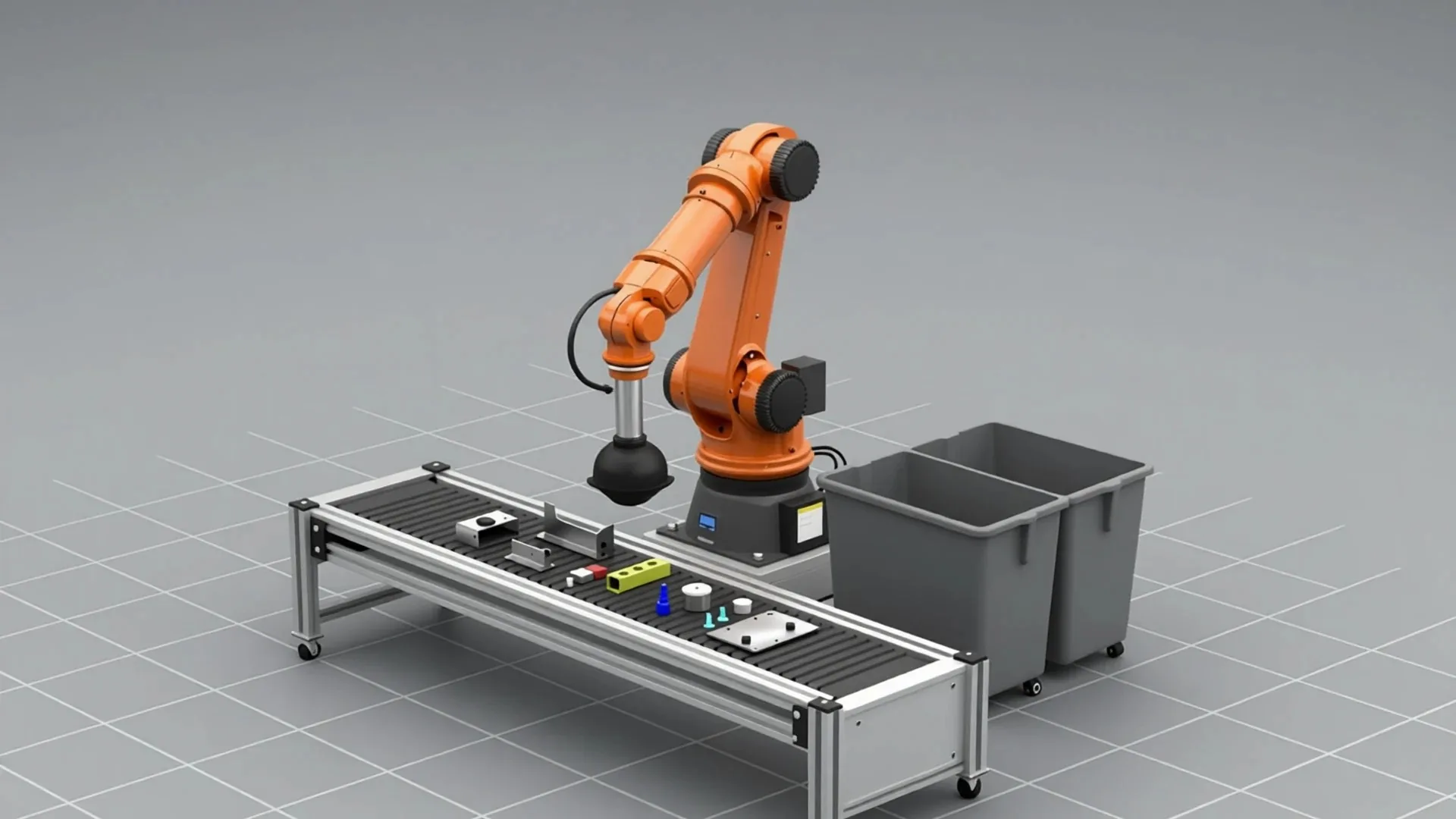
Pick Cell
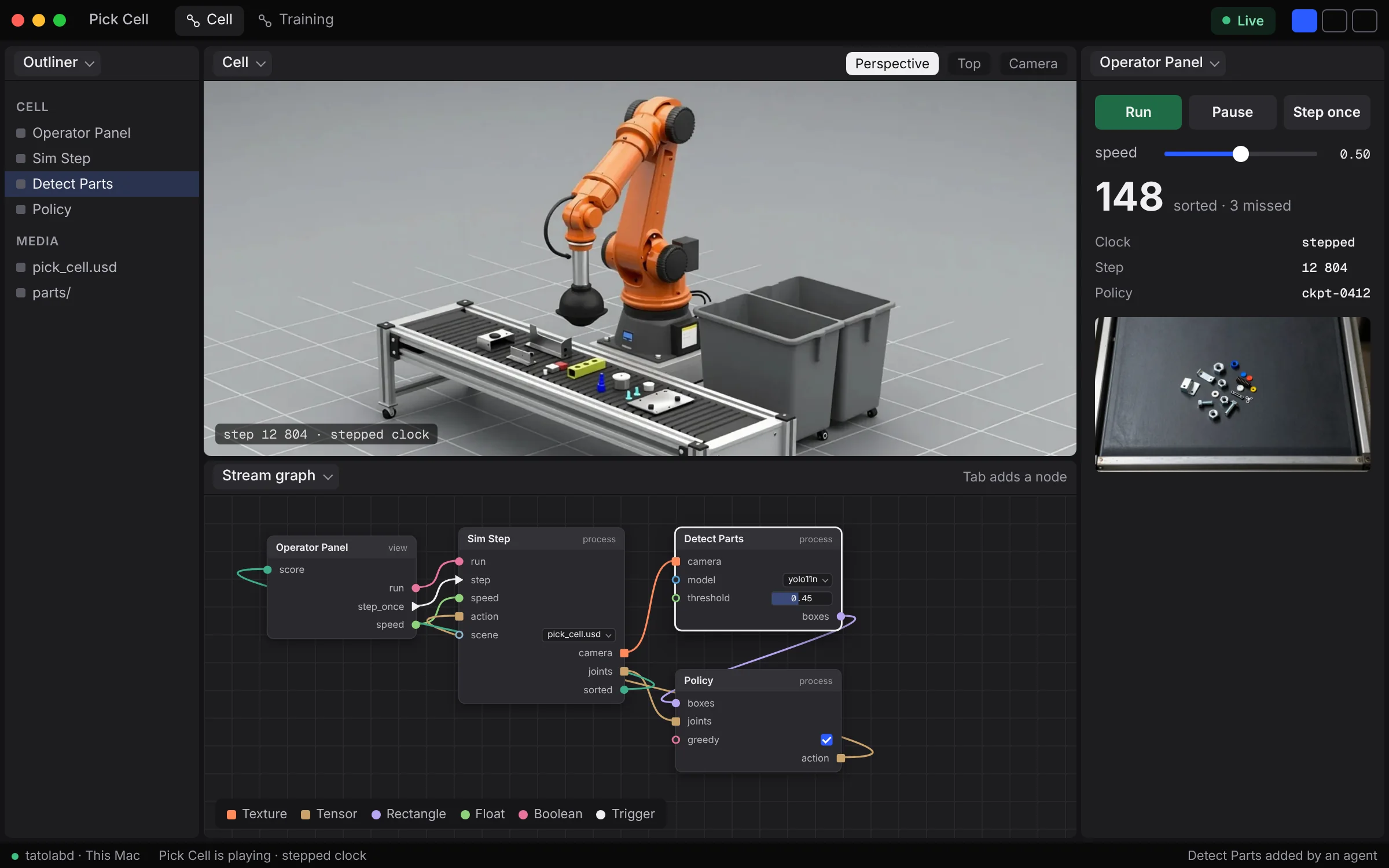
Robotics simulation
A robot arm learning to sort parts off a conveyor, before anyone bolts a real one to the floor. The simulator, the camera, the detector and the policy all run in one project, where you can watch every step.
- How it's built
- The physics runs in a Python node. Its camera picture goes to a detector, the detector feeds the policy, and the policy moves the arm. The clock waits for all of them before it steps, which means a slow model can't make the run skip.
- Make it yours
- Bring your own simulator and your own model. When the policy is good enough, point the detector at a real camera.
Run it on your machine.
Tato Studio is free and open source. You won't be asked to sign in, and there's no licence key to lose.
orbrew install --cask tatolab/tap/tato-studio
The engine is GPL-3.0-only. Tato Studio is AGPL-3.0-only, or a commercial licence from Tatolab LLC. Read the licences